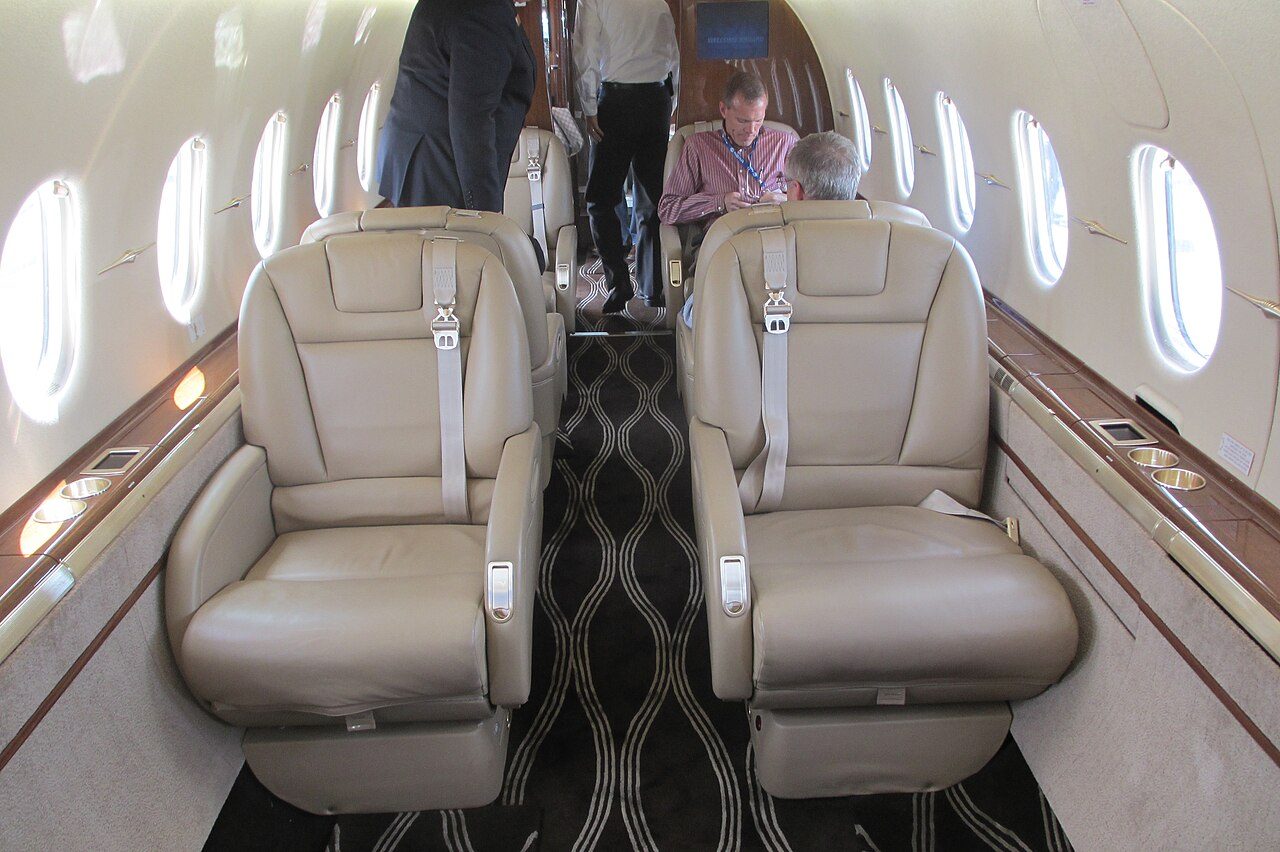

What a semi-private flight is
A semi-private flight sells individual seats on a jet or turboprop that flies a published schedule, usually from private terminals rather than the main airline terminal. You book a seat, not the aircraft, and you share the cabin with other travelers.
The appeal is a private-terminal experience at a per-seat price. JSX is the best-known US example. When The Points Guy reviewed it, JSX was flying 30-seat Embraer E135 and E145 regional jets from private jet terminals.
Altivo does not sell per-seat flights. We arrange whole-aircraft charters, operated by FAA Part 135 or Part 121 carriers. This guide explains semi-private flying so you can choose the right option for each trip.
The rules behind per-seat flights
Most US semi-private service is built on DOT's public charter rule, 14 CFR Part 380. A public charter operator arranges and sells the flights, and one or more direct air carriers operate them under a contract that commits the carrier to fly. DOT must accept the operator's prospectus before it advertises or sells. Passenger payments must be protected by a surety bond, a trust, or a security agreement combined with a bank depository account.
On the safety side, the FAA definitions in 14 CFR 110.2 matter. Scheduled passenger flights are normally airline operations, but public charters under Part 380 are excluded from the definition of a scheduled operation. Instead, they can be flown as on-demand operations under Part 135, on airplanes with 30 or fewer passenger seats and a payload capacity of 7,500 pounds or less.
The other route is Part 135 commuter service. These are genuinely scheduled flights, but only on aircraft with nine or fewer passenger seats, and for airplanes only those that are not turbojet-powered. That limit is why per-seat jet service has relied on the public charter structure.
As Cranky Flier explained in 2023, JetSuiteX, Inc. sells JSX's flights as the public charter operator, and an affiliated carrier, Delux Public Charter, LLC, operates them.
What changed from 2023 to 2026
On 29 August 2023, the FAA published a notice in the Federal Register, docket FAA-2023-1857, about revising the definitions of on-demand, supplemental and scheduled operations. It said some public charter flights appear indistinguishable from airline flights. It raised removing the Part 380 exceptions, which could move some operators from Part 135 to the airline rules in Part 121.
On 17 June 2024, after receiving about 60,000 comments, the FAA said it would begin a rulemaking to amend the Part 110 definitions. Public charters would then follow the same safety parameters as other operations. It also said it would convene a Safety Risk Management Panel to assess a new operating authority for scheduled Part 135 operations in 10 to 30 seat aircraft.
Security rules changed separately. Trade publication ch-aviation reported in January 2025 that TSA would require passengers on Part 380 flights in Part 135 aircraft over 12,500 pounds to be screened with TSA-approved equipment. The operator carries out the screening rather than TSA staff, and carry-on liquids limits apply.
The FAA's 2024 announcement did not change the rules by itself, because a change needs a proposed rule and public comment first. Part 380 still works as before: in October 2026, DOT published a Federal Register notice to extend its Part 380 information collection, and the rule still requires an accepted prospectus before a public charter is advertised or sold. Follow docket FAA-2023-1857 for updates.
Semi-private vs charter vs airline first class
Compared with airline first class, semi-private usually means a private terminal, a smaller aircraft and a short walk to the plane. In exchange you get fewer routes and fewer departures, and seats can sell out on busy days.
Compared with a whole-aircraft charter, you give up control. The schedule, route and airports are fixed, the cabin is shared, and the carrier sets the baggage and pet rules. With charter you choose the aircraft, the time and often an airport closer to your door, and you pay for the whole aircraft. A light jet in the class of the Embraer Phenom 300 typically charters for $5,500 to $9,850 per hour, and a midsize jet for $9,790 to $10,840, before taxes and fees.
For one or two travelers on a route semi-private serves, a per-seat fare is hard to beat. For a family or group, or for a route or time semi-private does not fly, a charter shared across the group can make more sense than it first appears.
Who semi-private suits
Semi-private works best for solo travelers and pairs who fly city pairs the carrier serves, can fit the published times and travel with modest luggage. It suits travelers who want to avoid the main terminal without paying for a whole aircraft.
It suits travelers less well when they need to leave at a specific time, fly to an airport off the network, travel with large or unusual bags or bring a pet the carrier does not accept. It also suits people less well when they need a private cabin for work or privacy.
Groups have another option. Friends or colleagues can share a whole charter and split the cost among themselves. DOT's broker rule treats such a charter as a single-entity charter, including on small aircraft where the passengers have grouped together themselves.
Booking and baggage norms
You book semi-private flights directly with the carrier or its public charter operator, much as you would an airline: choose a route, date and fare, and pay per seat. Each carrier sets its own fare types and change and refund rules, so read them before you pay.
Cabin baggage limits are tighter than on most airlines because the aircraft are small. When The Points Guy reviewed JSX in 2021, passengers could bring one personal item that fit under the seat. Checked bags were included in the fare: two on the basic fare and three on the refundable fare, up to 50 pounds each. Check the carrier's current policy before you pack.
Check-in is quicker than at an airline. The same 2021 review said passengers could arrive about 20 minutes before departure. Screening rules for larger public charter aircraft have changed since then, so allow the time the carrier now recommends.
Your payment has protection. Part 380 requires the public charter operator to protect passenger funds through a bond, trust or bank depository arrangement.
When a whole charter is the better choice
Choose charter when the schedule matters more than the seat price, when your group fills enough seats to share the cost, or when you need an airport, aircraft size or time that no semi-private network offers. Charter also gives you a private cabin for meetings, family travel or pets.
Altivo's quote desk runs around the clock. Our US quotes are all-in, in US dollars, with federal excise tax and segment fees included in the total. Every flight is operated by an FAA Part 135 or Part 121 air carrier named on the quote and contract, and Altivo acts as your agent under DOT's Part 295 broker rules.
Sources
- FAA: Notice of intent, docket FAA-2023-1857 (August 2023)
- Federal Register: Revisions to the Regulatory Definitions of On-Demand, Supplemental and Scheduled Operation (2023)
- FAA: Ensuring Safe Public Charter Flights, Exploring Future Solutions for All Flyers (June 2024)
- eCFR 14 CFR 110.2: Definitions
- eCFR 14 CFR Part 380: Public Charters
- Federal Register: Public Charters, 14 CFR Part 380 information collection (October 2026)
- ch-aviation: US government tightens security rules for Part 380 charters (2025)
- The Points Guy: Flying JSX review (2021)
- Cranky Flier: Are JSX and SkyWest Charter Legal? (2023)
- eCFR 14 CFR Part 295: Air Charter Brokers